
A growing wave of protests in India’s capital is mounting a significant challenge to Prime Minister Narendra Modi’s government, as a youth-led movement expands from anger over examination paper leaks to broader concerns about electoral integrity, civil liberties and government accountability.
In an opinion article published on October 19, 2026, The Guardian columnist Meena Kandasamy argued that the protests organised by the Cockroach Janta Party (CJP) have weakened the image of political invincibility cultivated by Modi and his Bharatiya Janata Party (BJP), which has held power since 2014.
The demonstrations initially gathered momentum over alleged examination paper leaks and demands for the resignation of India’s education minister. The movement has since broadened its demands, with protesters now calling for the resignation of Chief Election Commissioner Gyanesh Kumar over a controversial revision of electoral rolls.
The dispute intensified after reports emerged that more than 130 million names had been removed from voter lists during the revision process. Opposition parties and critics have questioned whether eligible voters could be excluded, raising concerns about the transparency and fairness of the electoral system. The Election Commission and the government have defended the exercise as an effort to remove duplicate and ineligible entries.
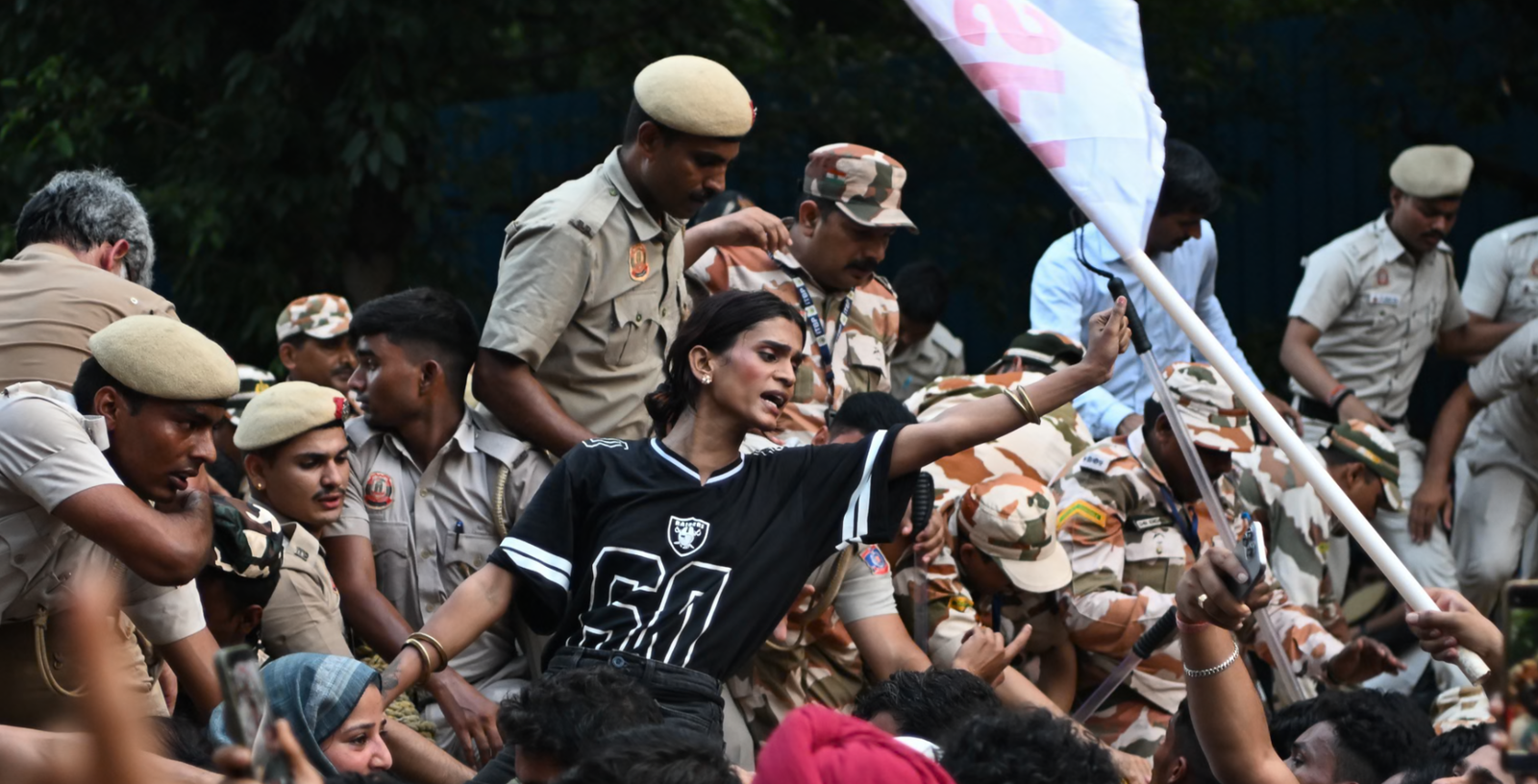
The protests have attracted students, activists, opposition politicians and members of the public. Demonstrators have gathered at prominent locations in New Delhi, including Connaught Place, while police have imposed restrictions on assemblies and deployed substantial security forces around planned demonstrations.
According to Kandasamy’s account in The Guardian, protests on October 10 and 12 continued despite the detention of movement leaders and a heavy police presence. Security measures reportedly included restrictions on access to protest sites, the closure of metro stations and the detention of activists travelling to the capital.
The crackdown became another source of public anger. Protest organisers and supporters reported preventive detentions, alleged police violence and an internet shutdown in parts of the capital. Authorities also detained prominent activists associated with the demonstrations, including CJP founder Abhijeet Dipke, ahead of a protest in central Delhi on October 16.
The movement’s supporters have used social media to circulate videos, slogans and images from the demonstrations, helping the protests maintain visibility despite restrictions. Singing, dancing, satirical placards and the waving of Indian national flags have become prominent features of the rallies.
The national flag has particular significance in the current demonstrations. Protesters have sought to present their activities as a defence of democratic rights and national institutions rather than an attack on the country. The strategy also challenges attempts to portray government critics as anti-national, a label frequently used in India’s political debates.
The Cockroach Janta Party emerged from an online campaign that transformed a derogatory comparison of unemployed young people to cockroaches into a symbol of resilience. The movement initially focused on youth unemployment, alleged examination irregularities and accountability in the education system. It has since developed into a wider platform for expressing frustration with political institutions.
The dispute over electoral rolls has given the movement a new focus. Protesters argue that any process capable of removing large numbers of names from voter lists must be transparent and subject to effective scrutiny. The government, meanwhile, maintains that electoral roll revisions are necessary to protect the integrity of elections.
The issue has implications for India’s democratic institutions because access to voter registration is fundamental to participation in elections. Any allegation that eligible citizens have been wrongly excluded requires careful examination of the evidence, the procedures followed and the safeguards available to affected voters.
Kandasamy argues that the protests have also challenged the BJP’s political messaging by bringing together people whose concerns extend beyond traditional party loyalties. The demonstrations have included students and young professionals as well as citizens who are dissatisfied with unemployment, limited job opportunities and the government’s response to dissent.
The involvement of opposition parties has added another political dimension. Congress and other opposition figures have supported demands for accountability, although the movement’s ability to maintain an independent identity and build a sustained nationwide campaign remains uncertain.
The BJP continues to possess substantial political support, and the protests do not necessarily indicate that the government is on the verge of losing power. However, the scale of mobilisation in Delhi and the growing attention surrounding electoral transparency have created a challenge that extends beyond a single policy dispute.
The immediate outcome will depend partly on how authorities respond to demands for accountability, whether the controversy surrounding voter registration is resolved transparently and whether the movement can sustain public participation. The government’s handling of the protests may also influence broader debates about freedom of expression, the right to assemble and the role of independent institutions in India.
For now, the demonstrations have brought youth-led political activism back to the centre of India’s national debate. Whether they develop into a lasting political force remains to be seen, but the movement has demonstrated that concerns about jobs, education, voting rights and state power can converge into a broader challenge to the country’s political establishment.
The protests have therefore become an important test of the relationship between the Indian government and citizens demanding greater accountability. Their longer-term impact will depend not only on the size of the crowds but also on whether the issues driving the demonstrations lead to concrete institutional changes.