
Bangladesh is struggling to contain a devastating measles outbreak that has exposed serious gaps in childhood vaccination, healthcare preparedness and the country’s ability to reach vulnerable communities. The crisis is also serving as a warning to other nations about the dangers of declining immunization coverage.
According to a Reuters investigation published on October 17, 2026, Bangladesh recorded more than 202,000 suspected measles cases between mid-March and October 9, including approximately 22,000 laboratory-confirmed infections. The World Health Organization (WHO) reported 1,147 deaths during the period, with children under five accounting for 94 per cent of reported fatalities.
The scale of the outbreak was the highest reported by any country that year, according to the figures cited by Reuters. Health experts say the crisis has been aggravated by falling vaccination coverage, weaknesses in official data, inadequate preparation for emergency immunisation and failures to reach families in remote areas.
“This is a real warning to every country,” Mark Jit, a WHO vaccine adviser and professor at New York University’s School of Global Public Health, told Reuters. He stressed that preventing outbreaks through routine vaccination is safer, cheaper and easier than responding after a disease has spread.
Bangladesh had previously made substantial progress in childhood immunisation. WHO and UNICEF estimates showed that in 2024, coverage reached 96 per cent for the first measles vaccine dose and 93 per cent for the second. However, vaccination coverage declined amid political upheaval and disruptions to health services in 2025.
The WHO and UNICEF subsequently estimated that first-dose coverage fell to 90 per cent in 2025, while second-dose coverage dropped to 86 per cent. Both figures were below the 95 per cent coverage generally needed to prevent sustained measles transmission in communities.
The disruption followed the political unrest that ended Sheikh Hasina’s 15-year rule in 2024. Reuters reported that health workers’ strikes, delayed vaccine orders and interruptions to routine follow-up programmes contributed to the deterioration of immunisation services.
The consequences have been particularly severe in the northeastern Sylhet region, one of the areas hardest hit by the outbreak. Families interviewed by Reuters described losing young children who had not received measles vaccinations, despite the availability of immunisation programmes.
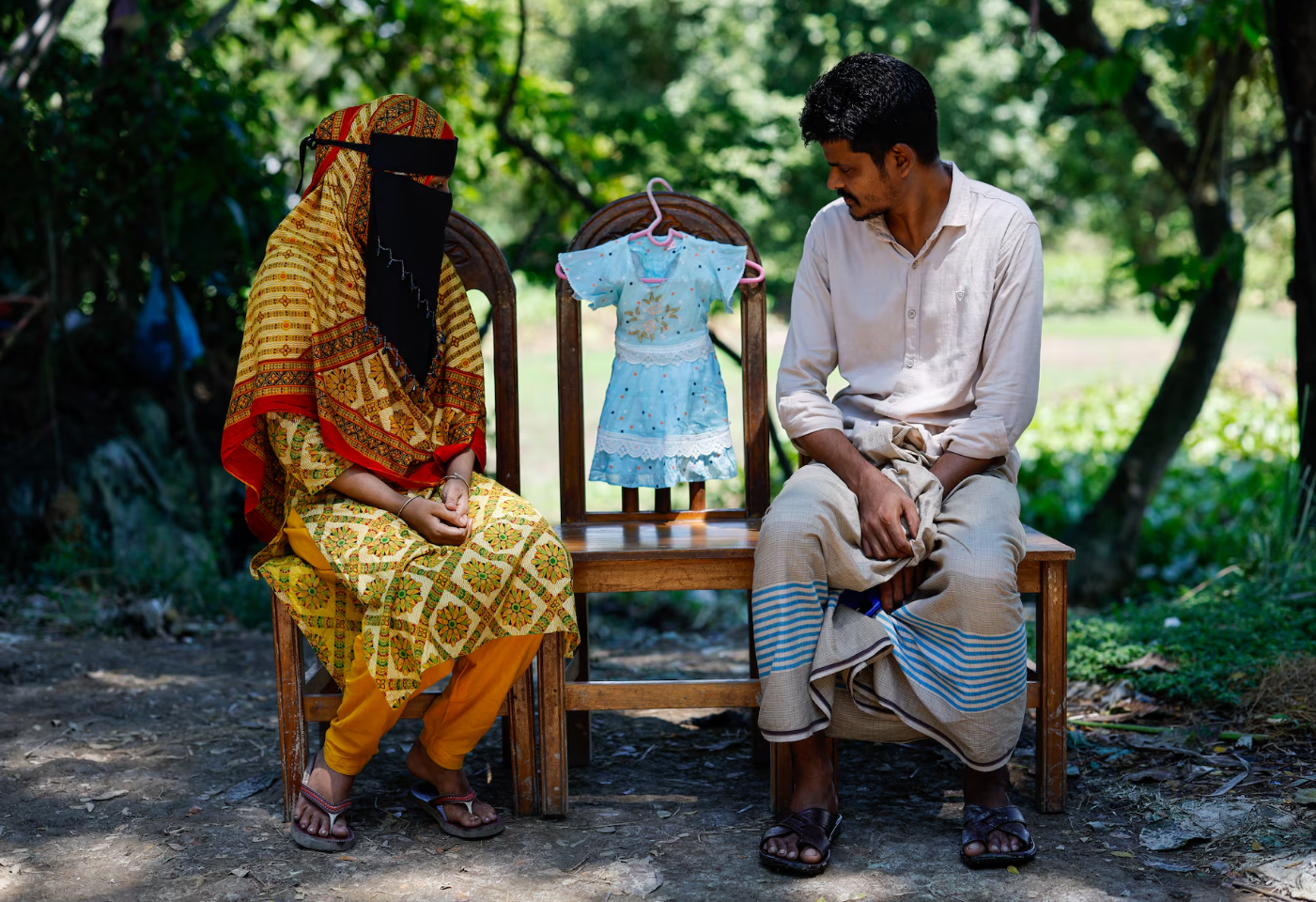
Two-year-old Arman Hossain died in July after being admitted to hospital, where his family had to pay for treatment by selling their three-wheeled auto-rickshaw. His father, Amin Mia, said health workers had not visited their remote village to offer vaccinations before the child became ill. His four-year-old daughter survived the disease despite also being unvaccinated.
Another family in the Sylhet region lost nine-month-old Labiba Akter in June. Her father, Humayun Rashid, said the family had not been informed that she was eligible for vaccination under an emergency programme that had lowered the minimum eligible age to six months.
These accounts highlight a major weakness in the public health response: vaccination programmes cannot protect children who are not identified, informed or reached by health workers.
Bangladesh launched an emergency vaccination campaign in April and May, during which nearly 20 million children received a dose. The initial campaign appeared to slow the outbreak, but subsequent data raised questions about whether all eligible children had been reached.
According to Reuters, a separate health intervention in June identified a target population approximately four million children larger than the group listed for the measles campaign, despite both programmes covering the same age range. The discrepancy raised concerns about the accuracy of population estimates and vaccination records.
Preparations for the emergency campaign also faced shortcomings. Documents reviewed by Reuters showed that officials opted for one round of readiness checks before the campaign began, rather than the four rounds typically conducted. Such checks assess whether districts have adequate vaccine storage, supplies and reliable estimates of the children requiring immunisation.
The campaign was organised within approximately four weeks, while former immunisation officials said such large-scale operations usually require months of preparation. Subsequent assessments found that the proportion of confirmed measles cases involving unvaccinated children remained high, indicating persistent gaps in coverage.
The challenges are compounded by limited access to remote communities, incomplete child registration and shortages of health workers. UNICEF and the Bangladesh Bureau of Statistics estimate that as many as 40 per cent of children are not registered, while government data indicate that around one-third of health worker positions remain vacant.
In Sylhet, Reuters found that several families interviewed in September said they had not seen health workers offering vaccinations before measles affected their communities. Some reported that outreach workers arrived only after a child had died.
The government launched another campaign at the end of September, targeting an additional 3.4 million children who had previously been missed. Health authorities have also faced calls from experts to expand vaccination efforts to children older than five, who account for a substantial share of reported cases.
The outbreak has placed additional pressure on hospitals already dealing with other infectious diseases, including dengue. In September, Shahid Shamsuddin Ahmed Hospital in Sylhet, which has 100 beds, was treating 178 patients on the day Reuters visited. Overcrowding has further complicated the delivery of timely care to seriously ill children.
Measles is highly contagious and can cause fever, coughing and a characteristic skin rash. Although many patients recover, the disease can lead to serious complications and death, particularly among young children and those affected by malnutrition or inadequate access to medical treatment.
The crisis also carries implications beyond Bangladesh. In countries where vaccine confidence is declining or routine immunisation systems are underfunded, falling coverage can leave communities vulnerable to outbreaks even when effective vaccines are available.
The WHO has emphasised the need to strengthen routine immunisation so that children do not fall through gaps in emergency campaigns. Experts say reliable population data, sustained outreach to remote communities, adequate staffing and better preparation are essential to preventing future outbreaks.
Bangladesh’s experience demonstrates that emergency vaccination drives alone cannot compensate for a weakened routine healthcare system. Ensuring that every child is identified, reached and fully vaccinated remains central to preventing further deaths and reducing the risk of similar crises elsewhere.
The government has said it is working to contain the outbreak, while health partners continue to support vaccination efforts. The scale of the crisis, however, underscores the urgent need to rebuild public health capacity and ensure that children in the most vulnerable communities are not left behind.