
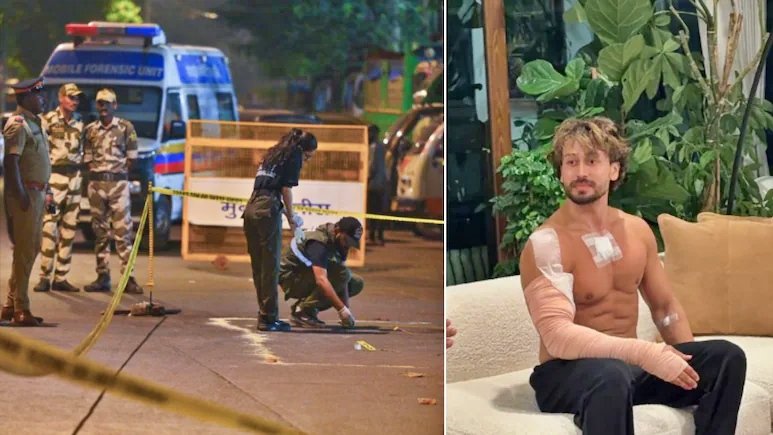
Mumbai, India: The shooting incident targeting Bollywood actor Tiger Shroff’s car has renewed concerns about the return of organised crime to Mumbai’s film industry, with criminal syndicates operating in northern India increasingly seen as potential sources of threats and intimidation.
For nearly two decades, the major gangs that once dominated Mumbai’s underworld had largely lost their influence over Bollywood. Extortion calls and gang-related violence against film personalities declined significantly, bringing relief to an industry that had previously been a major target for criminal networks seeking money and influence.
However, the latest shooting has raised fresh questions about whether those threats are resurfacing under a different set of players.
According to NDTV, three men opened fire at Shroff’s car on Sunday as he was leaving a sporting event in Mumbai’s Juhu area. The actor was reportedly sitting in the front of the vehicle and escaped without injury. Two other people sustained bullet wounds in the incident.
A social media post attributed to Anmol Bishnoi, who is associated with the Bishnoi gang, subsequently claimed responsibility for the shooting, NDTV reported. The incident has drawn comparisons with the period when Bollywood filmmakers and other prominent industry figures faced threats linked to extortion demands and personal rivalries.
During the late 1990s and early 2000s, several high-profile attacks demonstrated the extent of the underworld’s influence over the Hindi film industry.
Film producer Mukesh Duggal was shot dead in 1997 in a case reportedly connected to gang rivalries and film-financing disputes. In the same year, filmmaker Rajiv Rai was attacked outside his office in Mumbai’s Tardeo area. Shooters reportedly linked to gangster Chhota Shakeel carried out the attack, but a police constable accompanying Rai returned fire and helped save his life.
Also in 1997, T-Series founder Gulshan Kumar was murdered in broad daylight in Versova. The killing became one of the most notorious crimes associated with the period. Abu Salem’s gang was linked to the case, with reports pointing to a dispute involving rival interests.
In 2000, filmmaker Rakesh Roshan was shot outside his office in Santa Cruz, shortly after the release of his son Hrithik Roshan’s film Kaho Naa… Pyaar Hai. Roshan survived the attack after receiving medical assistance.
The violence continued into the following years. Ajit Diwani, secretary to actor Manisha Koirala, was killed in 2001 in a case linked to an alleged refusal to meet extortion demands. Filmmaker Lawrence D’Souza also survived a shooting in 2002 that was reportedly orchestrated by gangster Ejaz Lakdawala. There were further reports of attempted kidnapping plans involving actor Aamir Khan and filmmaker Ashutosh Gowariker following the success of Lagaan.
The sustained pressure eventually prompted Bollywood representatives to approach Mumbai’s police leadership. According to NDTV, a delegation of film personalities met then Police Commissioner M.N. Singh and warned that the industry could consider leaving Mumbai for Hyderabad if the threats continued.
Pressure from political leaders and the film industry contributed to a tougher response from law enforcement. Mumbai Police pursued organised crime networks through aggressive operations and the enforcement of the Maharashtra Control of Organised Crime Act, commonly known as MCOCA.
Several prominent gang leaders were imprisoned, arrested or otherwise removed from active operations. Dawood Ibrahim’s network reportedly stopped making extortion calls to Bollywood during the first decade of the 2000s. Abu Salem was arrested in Lisbon, Portugal, in 2002, while Chhota Rajan was arrested in Bali, Indonesia, and deported to India in 2015. Gangster Arun Gawli’s operations also declined following his arrest and conviction in a murder case involving a Shiv Sena leader.
As the influence of Mumbai’s major underworld figures weakened, reports of extortion targeting Bollywood became less frequent, and the industry experienced a prolonged period of relative relief from the violence associated with the earlier era.
The situation began attracting renewed attention in recent years as gangs based in northern India emerged as prominent players in high-profile criminal cases. The Lawrence Bishnoi gang drew national attention after gunfire was reported outside actor Salman Khan’s residence in Mumbai’s Bandra area in 2024. The gang has also been linked to the killing of politician Baba Siddique in October 2024.
More recently, some Bollywood figures, including filmmaker Rohit Shetty, have reportedly received extortion calls, adding to concerns about the safety of celebrities and people working in the film industry.
Criminal groups may seek to exploit the fear generated by attacks on prominent individuals, using threats and violence to pressure their targets. The shooting involving Tiger Shroff has therefore renewed questions about whether organised crime is attempting to regain influence over Bollywood, even as the groups involved differ from those that dominated Mumbai in the 1990s.
The investigation into the latest incident will be crucial in establishing who ordered the shooting, the motive behind it and whether it was connected to a wider criminal network. Until those details are confirmed, comparisons with the underworld violence of the past remain a warning about the continuing security challenges facing India’s entertainment industry.
The incident highlights how the threat landscape may have changed, even as the underlying concerns over extortion, intimidation and the safety of film personalities remain.